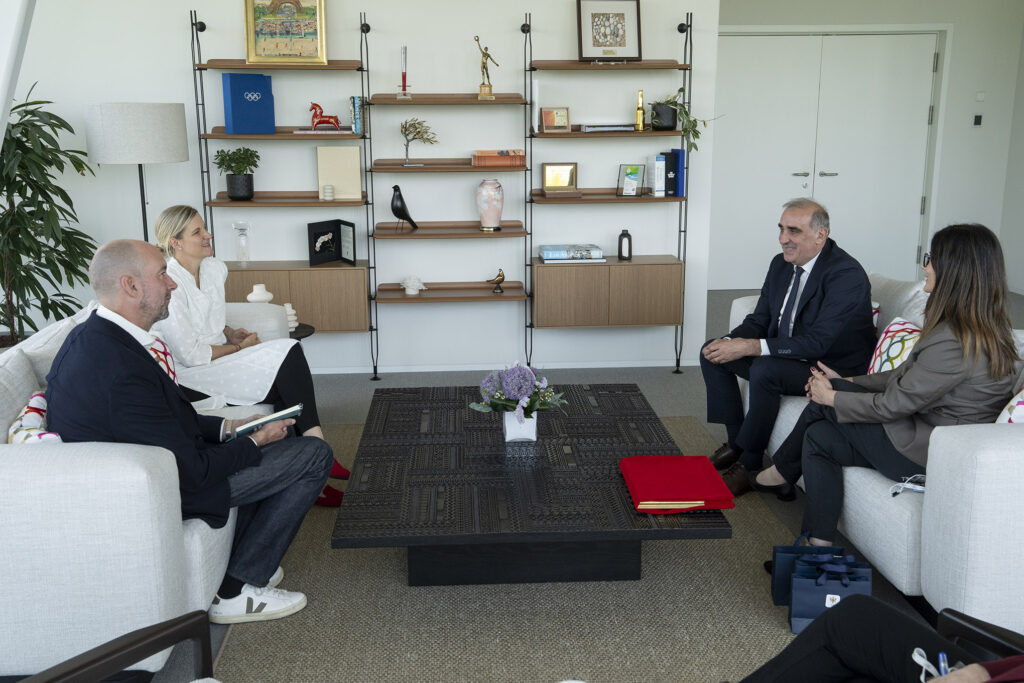
A delegation of NOC Montenegro, led by President Dušan Simonović, paid an official visit yesterday to the headquarters of the International Olympic Committee in Lausanne.
The visit was given particular significance by the meeting with IOC President Kirsty Coventry, marking the first official meeting between President Dušan Simonović and the newly elected President of the IOC. During an open and substantive discussion, the excellent cooperation between NOC Montenegro and the IOC was highlighted, as well as the importance of national Olympic committees, particularly those from smaller sports systems, being active participants in processes shaping the future of the Olympic Movement.
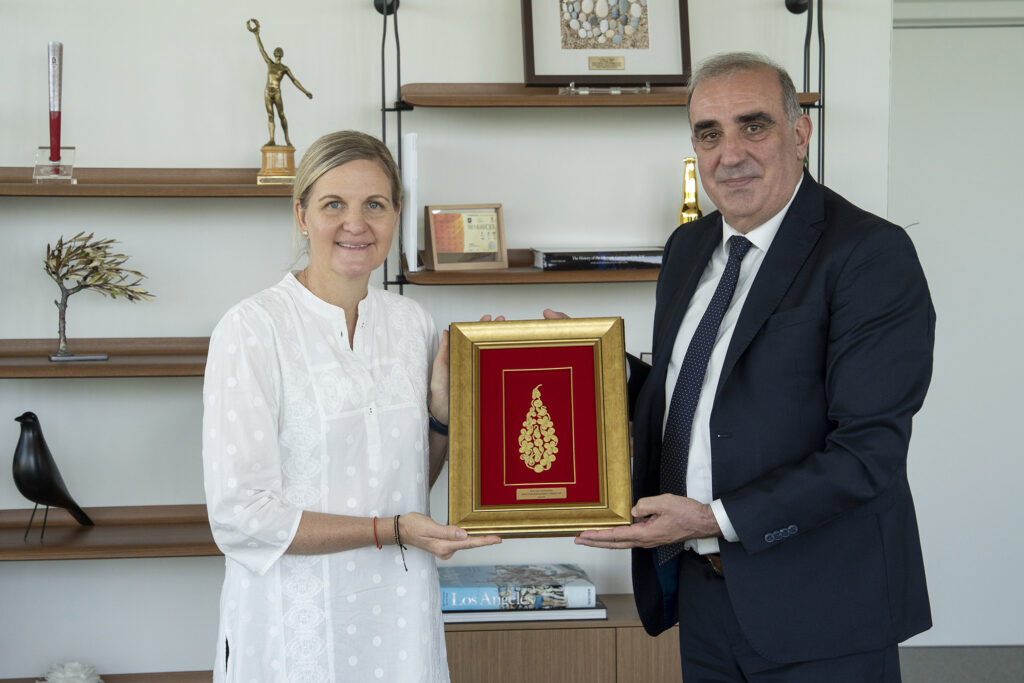
President Simonović introduced President Coventry to the key priorities of NOC Montenegro for the upcoming Olympic cycle, particularly in the context of the new NOC Montenegro Strategy 2026–2030, preparations for the Los Angeles 2028 Olympic Games, strengthening the position of athletes, Olympic education, gender equality, safeguarding the integrity of sport, athlete health, safeguarding in sport and system sustainability.
During the meeting, it was emphasised that NOC Montenegro is an active, responsible and constructive partner of the Olympic Movement, and that in Montenegro Olympism is not viewed solely through participation at the Olympic Games, but as a broader social framework connecting sport, education, good governance, athlete safeguarding, international cooperation and the promotion of values.
NOC Montenegro actively contributes to IOC consultative processes, including discussions on the future of the Olympic Movement, financing models, the role of national Olympic committees, the position of small sports systems and the development of the Youth Olympic Games. In this context, it was emphasised that the voice of small NOCs must be clearly recognised in decision-making processes, as it is precisely within smaller systems that both the challenges and the genuine social significance of Olympic sport are most directly visible.
The IOC President expressed satisfaction with the situation within NOC Montenegro, as well as with the fact that NOC Montenegro has maintained excellent and long-standing cooperation with her closest team of associates. She also expressed her expectation that this cooperation would continue in the future in the same spirit of partnership and openness.
Following the meeting with the IOC President, the visit continued according to the planned agenda through a series of working meetings with representatives of key IOC departments dedicated to institutional development, good governance, Olympic Solidarity programmes, athlete rights, health and safeguarding in sport.
One of the most important topics of the visit was the meeting with Jérôme Poivey, IOC Associate Director for Institutional Relations and Governance. The discussion focused on matters of good governance, the autonomy of the Olympic Movement, institutional strengthening of NOC Montenegro and the preparation of the new Statute of NOC Montenegro.
NOC Montenegro is currently in the process of drafting a new Statute, which will be aligned with the updated text of the Olympic Charter, relevant strategic documents and IOC standards, as well as contemporary principles of good governance. During the meeting, preliminary agreement was reached regarding the key directions of the amendments. Following consideration and adoption of the draft by the Executive Board of NOC Montenegro, the document will be submitted to the International Olympic Committee for review and approval. Upon receiving the IOC’s opinion, the final text of the Statute will be submitted to the Assembly of NOC Montenegro for adoption.
The new Statute is expected to introduce significant institutional changes, including more precise definition of governance procedures, further strengthening of the role of athletes within the bodies of NOC Montenegro, formalisation of gender equality principles through minimum representation of women within governing and working bodies, as well as further regulation of mechanisms related to integrity, accountability, transparency and dispute resolution within the sports system.
During the discussion with Poivey, particular emphasis was placed on the importance of preserving the autonomy of the national Olympic committee, as one of the fundamental principles of the Olympic Charter and a prerequisite for the stable, independent and responsible development of Olympic sport. Representatives of NOC Montenegro stressed that the amendments to the Statute are not viewed merely as a formal obligation, but as an important institutional step towards a more modern, clearly regulated and resilient Olympic system in Montenegro.
Throughout the day, the NOC Montenegro delegation also held meetings with representatives of IOC departments responsible for relations with national Olympic committees, Olympic Solidarity, information services, health, athlete safeguarding and athlete rights. Discussions involved James Macleod, Lenny Abbie, Niels Holmgaard, Sinéad Dowling, Aline de Ram, Gloria Viseras and Charlene Toudjman.
The meetings addressed programmes supporting national federations and athletes, the future model for the use of Olympic Solidarity funding, the development of NOC Montenegro capacities, long-term institutional development, the implementation of Olympic education in Montenegro, as well as the further strengthening of systems related to safeguarding, athlete health and athlete rights.
Members of the NOC Montenegro delegation presented activities in the field of Olympic education, particularly through the implementation of the OVEP programme within the Montenegrin educational system, aimed at bringing Olympic values closer to children and young people through schools, sport and everyday behaviour. It was emphasised that Olympism in Montenegro also has an educational and social dimension, and that NOC Montenegro seeks, through partnerships with institutions and schools, to build a long-term culture of sport, respect, fair play and responsibility.
A special part of the discussions was dedicated to athlete safeguarding, health and safe sporting environments. The existing institutional framework of NOC Montenegro was presented, including an IOC-certified Safeguarding Officer, ethical and disciplinary mechanisms, a Code of Conduct, Medical Code, protocols related to women athletes’ health and the development of an educational platform in the Montenegrin language. It was stressed that athlete safeguarding, mental and physical health, and the integrity of sport must be treated as an integral part of preparation and long-term athlete care, rather than as separate or occasional activities.
The discussions also included the model for involving athletes in decision-making processes through the work of the Athletes’ Commission, participation of athlete representatives within NOC Montenegro bodies, the Declaration on the Rights of Athletes, and activities aimed at ensuring athletes are partners in policy-making rather than merely beneficiaries of the system. Particular emphasis was placed on the fact that the new NOC Montenegro Strategy 2026–2030 positions the athlete at the centre of the system as a horizontal principle reflected across all strategic areas and key decisions.
The role of Olympic Solidarity in strengthening the capacities of national Olympic committees was also discussed, particularly in the context of increasing expectations placed on small NOCs in the areas of governance, athlete safeguarding, education, sustainability and preparations for major multisport competitions. It was emphasised that NOC Montenegro uses Olympic Solidarity funds responsibly and strategically, as an instrument for system development rather than solely as a source of individual programme support.
During the visit, the issue of the long-term institutional development of NOC Montenegro was also raised, including the need for a permanent and functional space that would allow for the integration of administrative, educational and museum-related content of the Olympic Movement in Montenegro.
The visit to the IOC headquarters in Lausanne represents an important step in the further strengthening of the international position of NOC Montenegro. It confirms the continuity of trust between NOC Montenegro and the IOC, but also the clear intention of NOC Montenegro to enter the next Olympic cycle as an institution that not only follows international standards, but actively incorporates them into the Montenegrin sports system.
NOC Montenegro will continue, in cooperation with the International Olympic Committee, continental organisations, Montenegrin institutions, national federations, athletes and other partners, to develop a system in which athletes are at the centre of all decisions and Olympic values form part of the broader social responsibility of sport in Montenegro.